


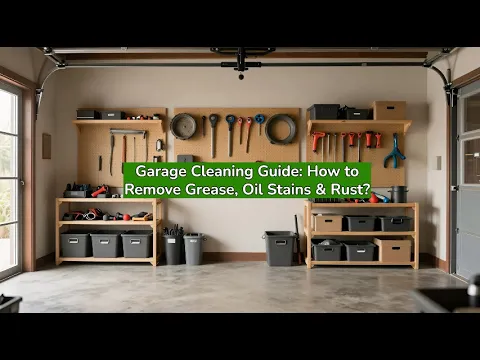
Garage Cleaning Guide: How to Remove Grease, Oil Stains & Rust?
Garages are usually the most neglected part of a home. From leaking car fluids and muddy tyres to rusty tools and dusty shelves, the space can quickly turn into a mess. In fact, many homeowners cannot park their cars inside their garages because of the clutter and poor maintenance. A dirty garage not only looks unpleasant but can also create safety hazards and unpleasant odours over time.
Keeping your garage clean and stain free improves the overall appearance and functionality of your home. Whether you are preparing for seasonal maintenance or planning a guaranteed bond cleaning Gold Coast service before moving out; tackling grease, oil stains and rust is very important. This article provides you with a garage cleaning guide. With the right techniques and regular upkeep, you can restore your garage floor and storage areas without too much hassle.
Hide
Show
]- Start with Decluttering and Dust Removal
- How to Remove Grease Stains from Garage Floors
- Effective Ways to Remove Oil Stains
- Removing Rust from Tools and Metal Surfaces
- Deep Clean Garage Walls and Storage Areas
- Prevent Future Grease, Oil and Rust Problems
- Why Regular Garage Cleaning Matters
- Infographic For Steps To Clean Your Garage
- Wrapping Up
1. Start with Decluttering and Dust Removal
Before treating stains or rust, clear out the garage completely. Remove boxes, tools, sports equipment and anything stored on the floor. This gives you proper access to all surfaces and helps you identify hidden stains or damaged areas. Sweep away dust, leaves, cobwebs and dirt using a broom or vacuum cleaner.
Once the clutter is removed, organise items into categories such as tools, gardening supplies and seasonal decorations. Use storage racks or labelled bins to keep everything in place. A clutter free garage is much easier to clean and maintain in the long run.
2. How to Remove Grease Stains from Garage Floors
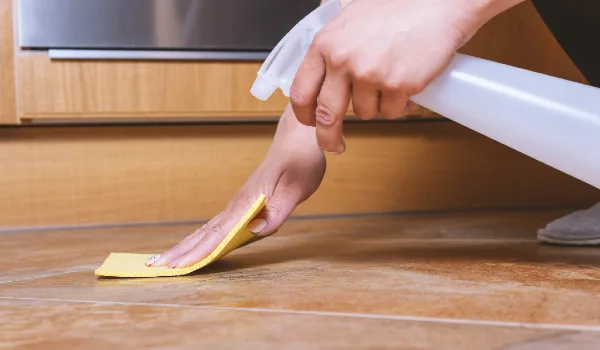
Grease stains are common in garages, especially if you frequently work on vehicles or machinery. Fresh grease stains should be treated quickly to prevent them from soaking into concrete surfaces. Sprinkle baking soda, cornstarch, or kitty litter over the stain and leave it for a few hours to absorb excess grease.
After absorption, scrub the area using warm water and dishwashing liquid with a stiff bristled brush. For older stains, use a degreaser specifically designed for concrete floors. Scrub thoroughly and rinse with clean water. Repeat the process if the stain is stubborn or deeply embedded.
3. Effective Ways to Remove Oil Stains
Oil stains can leave dark, slippery patches on garage floors, if ignored for too long. Start by blotting fresh oil spills with paper towels or rags. Avoid wiping the stain directly, as this can spread the oil further across the surface.
For tougher stains, follow these simple steps:
- Sprinkle baking soda or sawdust over the oil stain.
- Leave it overnight to absorb the oil completely.
- Scrub the stain with a mixture of warm water and detergent.
- Use a wire brush for stubborn patches.
- Rinse and dry the area properly.
If the stains remain visible, consider using a commercial oil remover or pressure washer for deep cleaning. This is especially helpful during bond cleaning Gold Coast inspections, where spotless garage floors can make a positive impression.
4. Removing Rust from Tools and Metal Surfaces
Rust forms when metal surfaces are exposed to moisture and air for extended periods. Garage tools, shelves and hardware are particularly vulnerable to rust buildup. To remove light rust, soak smaller items in white vinegar for a few hours and scrub gently with a wire brush or steel wool.
For larger rusted surfaces, create a paste using baking soda and water. Apply it directly to the rusted area and let it sit for 30 minutes before scrubbing. After cleaning, dry the metal thoroughly and apply a protective lubricant or rust resistant spray, to prevent future corrosion.
5. Deep Clean Garage Walls and Storage Areas
Garage walls and cabinets often collect dust, grease splatters and grime over time. Use a microfibre cloth or sponge with mild detergent and warm water to wipe down walls, shelves and cupboards. Pay special attention to corners and hidden spaces where dirt accumulates easily.
If mould or mildew is present, mix equal parts vinegar and water to clean affected areas. Avoid excessive moisture, while cleaning, because damp conditions can encourage further mould growth. Keeping storage spaces clean also helps protect your tools and belongings from damage.
6. Prevent Future Grease, Oil and Rust Problems
Regular maintenance is the key, to keeping your garage clean and functional. Place drip trays or cardboard sheets under vehicles to catch oil leaks before they stain the floor. Sweep the garage weekly and clean spills immediately to prevent permanent marks.
Here are a few easy prevention tips:
- Keep the garage properly ventilated.
- Store tools in dry cabinets or wall racks.
- Use anti rust sprays on metal equipment.
- Seal concrete floors, to resist stains.
- Inspect vehicles regularly for leaks.
7. Why Regular Garage Cleaning Matters
A clean garage is more than just visually appealing. It improves safety by reducing slippery surfaces caused by oil and grease. It also helps protect your tools, flooring, and stored belongings from damage caused by dirt, moisture, and rust.
If you are preparing to move out, garage cleaning becomes even more important. Landlords and property managers often inspect garages closely during final checks. Professional bond cleaning Gold Coast services usually include garage cleaning to ensure the property meets inspection standards and helps tenants secure their bond refund.
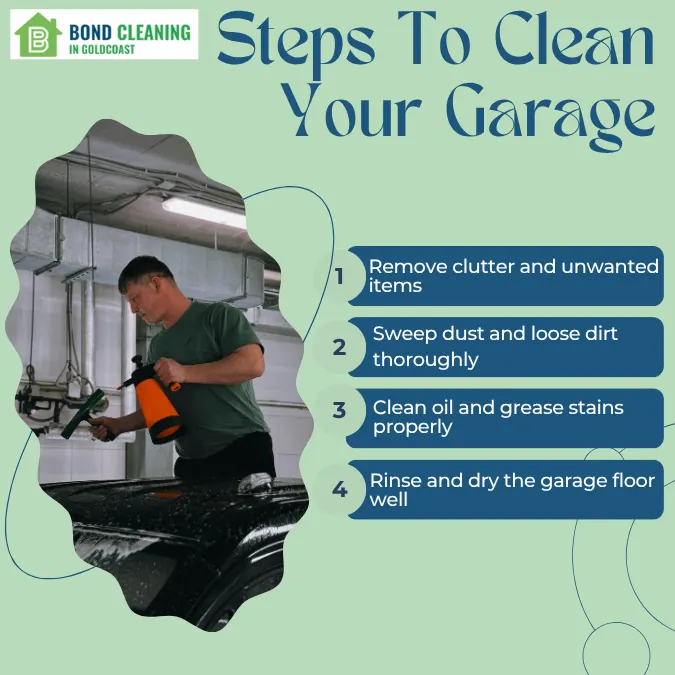
Infographic For Steps To Clean Your Garage
Wrapping Up
Garage cleaning may seem overwhelming at first, but breaking the process into smaller tasks makes it much easier to manage. Consistent maintenance and quick action against spills or rust will keep your garage in excellent condition throughout the year. Whether for daily use or end of lease preparation, a well maintained garage adds value, functionality and cleanliness to your home.