


Wall Cleaning Tips To Pass Your Final Rental Inspection
Clean walls do not just make your home look better; they bring you one step closer to a successful final inspection. Moving out of a rental property comes with a long checklist, and wall cleaning is often one of the most overlooked yet important tasks. While floors and kitchen usually get the most attention; walls quietly accumulate dust, stains and scuff marks over time. If left uncleaned, these marks can easily catch the eye of the landlord or property manager during the final inspection, potentially leading to deductions from your bond.
However, with the right approach, wall cleaning doesn’t have to be overwhelming. Whether you’re dealing with stubborn stains, crayon marks or everyday wear and tear; a few smart techniques can make your walls look as good as new. This article will provide you with wall cleaning tips to pass your final rental inspection. If you’re aiming for a smooth exit and want to avoid unnecessary costs, these tips will help you meet the expectations of a thorough bond cleaning Gold Coast service.
Hide
Show
]- Start with Dust Free Walls for a Flawless Inspection
- Use the Right Wall Cleaning Tools
- Test Cleaning Methods to Avoid Wall Damage
- Remove Wall Stains and Scuff Marks
- Focus on High Touch Wall Areas
- Eliminate Mould and Mildew to Meet Inspection Standards
- Repair Minor Wall Damage Before Your Final Inspection
- Infographic: How to clean walls for the end of lease?
- Wrapping Up
1. Start with Dust Free Walls for a Flawless Inspection
Before diving into deep cleaning, it’s important to remove loose dust and dirt from your walls. Dust can accumulate over time, especially in corners, along skirting boards, and near ceilings. If you skip this step, you risk spreading dirt around when you start using water or cleaning solutions.
Use a microfibre cloth, a soft broom or a vacuum cleaner with a brush attachment to gently clean the surface. Work from top to bottom so that any falling dust can be cleaned as you move downward. This simple step creates a clean base and ensures your deeper cleaning efforts are more effective.
2. Use the Right Wall Cleaning Tools
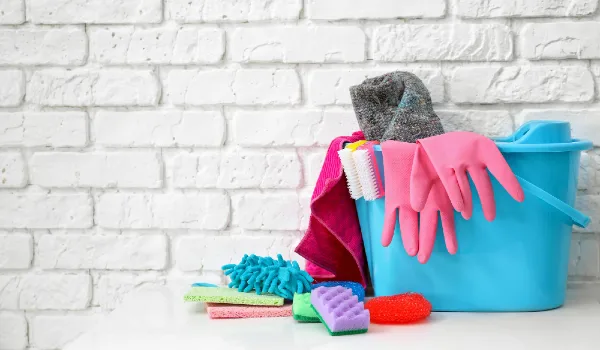
Having the right tools can make wall cleaning quicker and more efficient. Avoid abrasive scrubbers or harsh chemicals that can damage the surface. Work in sections and avoid soaking the walls with too much water. A gentle, controlled approach makes sure that your walls are cleaned without any unintended damage.
- Microfibre cloths for gentle cleaning
- Soft sponges to avoid paint damage
- A bucket with warm water and mild detergent
- Magic eraser for stubborn marks
- Soft bristle brush for corners and edges
3. Test Cleaning Methods to Avoid Wall Damage
Not all walls are created equal. Different paint finishes, such as matte, satin, or gloss, react differently to moisture and cleaning agents. Using the wrong method can lead to discolouration or damage, which may end up costing you more than a simple stain.
Always test your cleaning solution on a small, hidden area of the wall first. This will help you ensure that the paint doesn’t fade or peel. A gentle mix of warm water and mild dish soap usually works well for most surfaces. Taking a few extra minutes to test can save you from bigger problems later.
4. Remove Wall Stains and Scuff Marks
Walls often tell the story of daily life, scuff marks from furniture, fingerprints near switches, or even accidental spills. These marks are common but need special attention before your guaranteed bond cleaning Gold Coast inspection.
For light stains, a damp cloth with mild detergent should do the trick. For tougher marks, a baking soda paste or a magic eraser can be highly effective. Gently rub the area without applying too much pressure; as scrubbing too hard can damage the paint. Consistency and patience are key, when dealing with stubborn spots.
5. Focus on High Touch Wall Areas
Certain areas of your home are more prone to dirt and stains due to frequent contact. These include spaces around light switches, door handles, hallways, and children’s rooms. These spots are often closely inspected, making them critical during the cleaning process.
Focus extra effort on these high touch areas by cleaning them more thoroughly. Use a slightly stronger solution if needed but always stay mindful of the paint type. Ensuring these zones are spotless can significantly improve the overall appearance of your walls and boost your chances of passing the inspection.
6. Eliminate Mould and Mildew to Meet Inspection Standards
In humid environments, mould and mildew can develop on walls, especially in bathrooms, kitchens, or poorly ventilated spaces. These not only look unpleasant but can also raise health concerns and red flags during inspections.
To tackle mould, use a mixture of vinegar and water or a specialised mould cleaner. Apply the solution, let it sit for a few minutes and then wipe it clean. Make sure the area is well ventilated during and after cleaning. Addressing mould issues promptly is essential for meeting the standards of bond cleaning Gold Coast requirements.
7. Repair Minor Wall Damage Before Your Final Inspection
Cleaning alone may not be enough if your walls have small holes, cracks or chipped paint. These minor damages are common but can impact the final inspection if left unattended.
Use a wall filler or putty to patch up small holes from nails or screws. Once it dries, lightly sand the area and touch it up with matching paint if possible. Even small repairs can make a big difference in presenting a well maintained property.
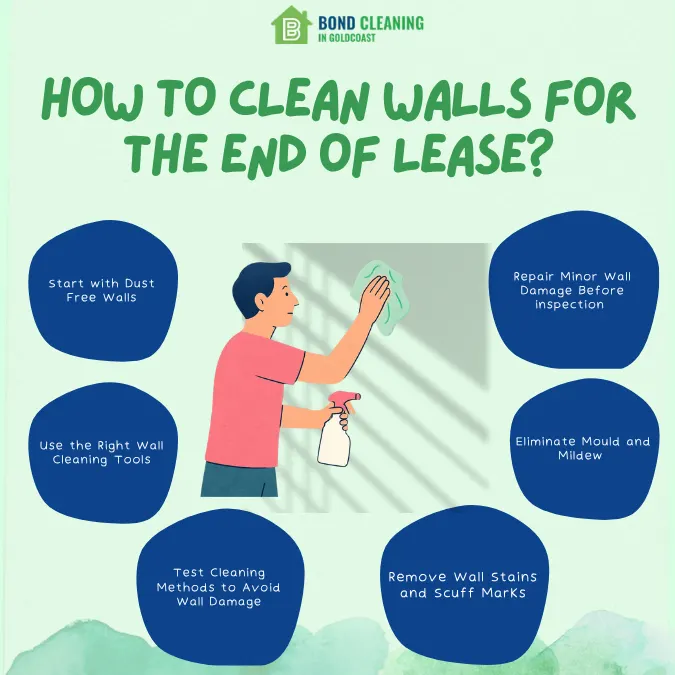
Infographic: How to clean walls for the end of lease?
Wrapping Up
Wall cleaning may seem like a small task, but it plays a big role in securing your full bond refund. Clean, well maintained walls reflect how well you’ve cared for the property and leave a positive impression during the final inspection. Putting in the effort to restore your walls can make all the difference between a smooth move out and unexpected deductions.